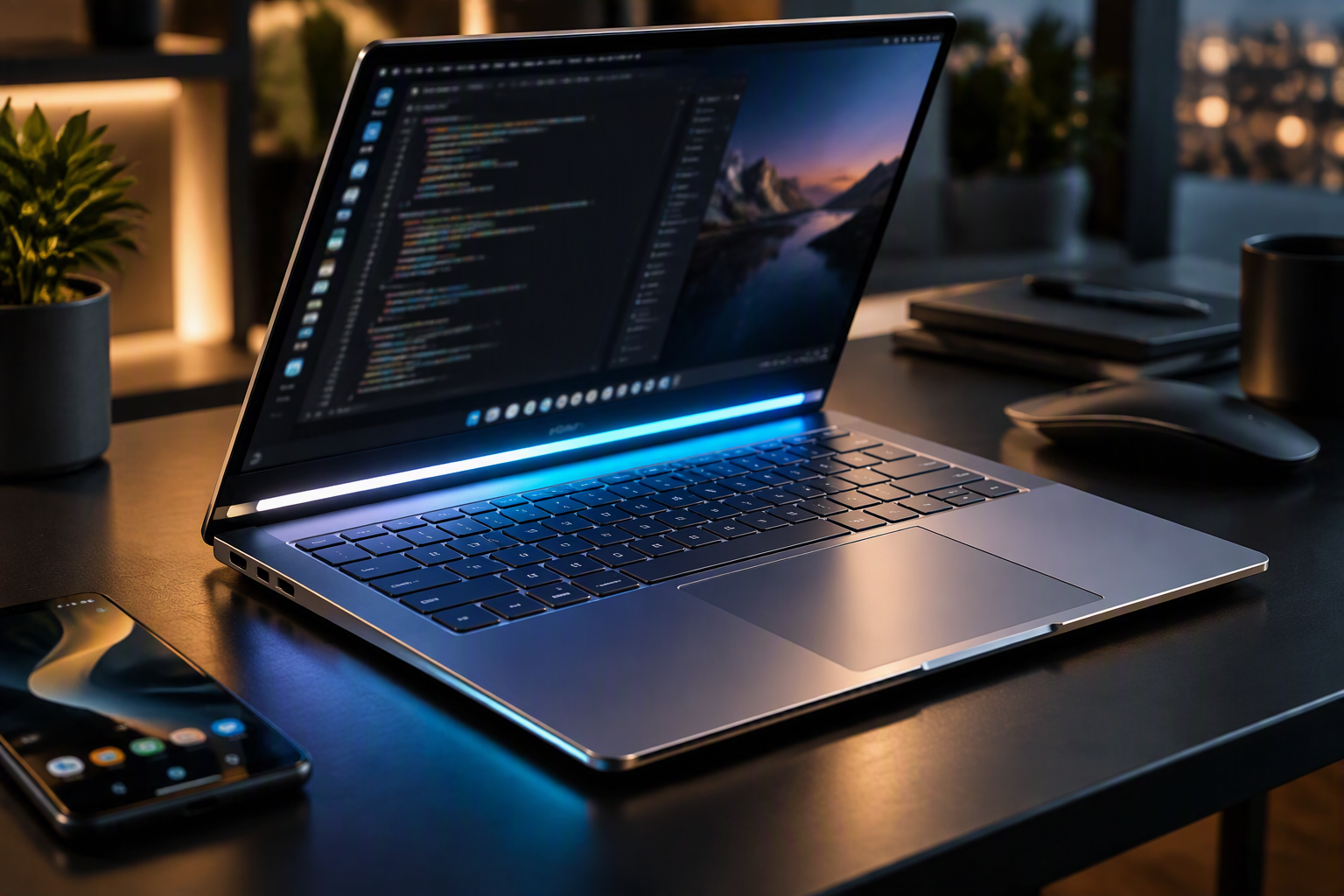
Well, well… a new Linux-based operating system has arrived, folks.
And, for the first time in years, it seems to address some of the biggest challenges that have held back desktop Linux across the three major branches: Debian, Arch, and Fedora.
Among the standout features:
✅ Seamless cloud integration, including file management and photo synchronization.
✅ Seamless smartphone-to-laptop integration.
✅ A professional-grade app store experience, ready out of the box.
✅ Premium OEM hardware designed around the operating system itself.
✅ A real Linux terminal for developers who want native tooling, native workflows, and native performance.
Linus Torvalds may have been right all along. One of his long-standing criticisms of desktop Linux has been the lack of a unified, reliable way to package and distribute software. He has argued that Linux distributions never truly solved application packaging, making software delivery unnecessarily complex for both developers and users.
Without a manufacturer willing to build a fully integrated hardware and software experience, the Linux desktop risked remaining a niche platform largely reserved for enthusiasts and power users.
When I first saw Google’s vision for this new generation of devices and its desktop experience, I immediately felt that something significant was happening.
Sure, the concept of Android Desktop Mode and Samsung DeX have been around for years. But from the demos I’ve watched this week, this feels like a completely different level of ambition and execution.
We’re watching, in real time, the birth of an entirely new Android-Linux ecosystem, one that has the potential to finally bridge the gap between mobile convenience and desktop productivity.
And honestly?
I’m here for it.
The Linux desktop may not arrive in the way many of us expected. It may not come through traditional distributions, desktop environments, or even the open source community’s efforts alone.
It may arrive through a product that combines Linux’s flexibility, Android’s ecosystem, cloud-native workflows, premium hardware, and a polished user experience under a single vision.
And if that’s what it takes to finally bring Linux-based computing to the mainstream, I’m all for it.
Would you buy one already, or are you waiting to see how the ecosystem evolves?
Deja una respuesta